You have your subliminal track ready, and it is almost bedtime. Then the question pops up: can you listen to subliminals while sleeping, or does that only work when you are awake?
It is one of the most common questions beginners ask. Open any subliminal community forum and you will find people who press play at bedtime and let a track run quietly through the night. You will also find people who prefer a short session while they fall asleep, and others who skip sleep listening altogether.
In this guide, we cover what listening to subliminals at night actually involves, what sleep research says about hearing while you sleep, and how to set everything up in a way that is comfortable, safe, and easy to stick with.
Can You Listen to Subliminals While Sleeping?
The short answer is yes. Listening to subliminals while sleeping is one of the most popular ways people in the subliminal community use their tracks. Nothing stops you from pressing play before bed, and many people find it one of the easiest habits to keep, because it asks for no extra time. You are simply replacing silence, or a late-night scroll, with something calm playing in the background.
There is no strict rule about how to do it. Some people listen for 20 to 30 minutes as they drift off. Others play a gentle loop overnight. A few play a track in the morning as they wake up. All of these are common, and the best approach is the one that feels comfortable and that you can repeat consistently.
As always, subliminal audio is a personal development tool. No specific result is guaranteed, and sleep comes first. If a setup ever disturbs your rest, it is perfectly fine to change it.
Why Bedtime Is Such a Popular Time for Subliminals
In the subliminal community, people often describe the minutes before sleep as a naturally relaxed window. Your day is winding down, your phone is away, and your mind is less busy.
Many listeners believe this drowsy state, which some call a theta or SATS state, makes a gentle audio message easier to take in, though this is a community belief rather than a settled scientific fact.
There is also a very practical reason. Bedtime is one of the few moments in the day when nothing else competes for your attention. You do not have to carve out extra time or remember to listen. You press play, set your volume, and rest.
Finally, it builds consistency. Subliminal community guides often stress that listening every day matters more than listening for a long time. Tying your track to something you already do every night, like brushing your teeth, makes it much easier to keep going.
What Sleep Research Says About Hearing While You Sleep
You may wonder whether the sleeping brain pays any attention to sound at all. A well-known 2019 study from the University of Bern, led by Katharina Henke and published in the journal Current Biology, offers an interesting glimpse.
During a daytime nap, researchers played pairs of words to sleeping participants: made-up words alongside real German words, such as an invented word paired with the word for house. The pairs were played repeatedly while the participants were in deep, slow-wave sleep. After waking, participants were better than chance at an implicit test of those word pairs, and the strongest results came when the second word was played during the peaks of the brain's slow waves.
The researchers also noted that the hippocampus, a brain area linked to memory, was involved when participants recalled the sleep-played words.
It is important to keep this in perspective. This was a carefully controlled laboratory study about vocabulary, not affirmations, and the authors themselves noted that evidence for learning during sleep has been inconclusive. Still, it adds to a picture in which the sleeping brain is not completely switched off from the sounds around it, and it is part of why researchers continue to study what happens during sleep.
Your bedtime routine is a gentle place to plant your daily intention.
Three Ways to Listen to Subliminals While Sleeping
The pre-sleep session
In this approach, you play your track for about 20 to 30 minutes while you fall asleep, usually with a sleep timer so the audio stops once you are likely to be out. Many beginners start here because it feels natural and keeps the audio from running all night. It is a good fit if you are a light sleeper or if you simply prefer silence later in the night.
The overnight loop
Here, your track plays on a loop at a very low volume throughout the night. Community guides often recommend a track that loops smoothly, because an abrupt gap or a hard restart can be noticeable to a light sleeper. A calming background such as rain, ocean waves, or brown noise helps the loop blend into your room.
The wake-up replay
Some listeners play the same track briefly when they wake up, before reaching for their phone. It is a quiet way to start the day with the same message you fell asleep to. This one is optional and works well alongside either of the other approaches.
How to Set Up Subliminals for Sleep Safely and Comfortably
Choose a speaker when you can
Comfort and ear health are the biggest practical questions for sleep listening. Ear, nose, and throat specialists quoted by Cleveland Clinic note that sleeping with in-ear earbuds can contribute to earwax buildup, trap moisture that raises the chance of irritation or infection, and press uncomfortably on the ear if you sleep on your side.
They also point out that noise-canceling earbuds can make it harder to hear an alarm or an emergency sound. Their suggestion for the safest sound while sleeping is an external speaker placed near the bed, with over-ear wireless headphones as a better option than earbuds.
For most people, a small bedside speaker at low volume is the simplest setup. Place it so you are not lying directly on it.
Keep the volume low
A bedside subliminal should feel like gentle background sound, not something you can follow word by word. Commonly cited hearing-safety guidance warns that prolonged exposure to sound around 85 decibels or louder can harm hearing over time, and a sleep track should sit far below that. If you can easily hear the background sound, you are in a good range. Set your volume while you are already lying in bed with the lights off, so the level matches your real conditions.
Use a timer or a smooth loop
If you prefer a pre-sleep session, set a sleep timer or a fade-out so the track ends on its own. If you prefer an overnight loop, make sure your player supports gapless repeat so there is no sudden pause or restart in the audio.
Pick a gentle background sound
Choose a background you genuinely find calming, such as rain, ocean waves, or brown noise. Avoid sounds with sudden changes, since those are more likely to pull you out of sleep. If your track includes binaural beats, remember that they require stereo headphones to work as intended, so consider soft sleep headphones and a very low volume.
A few common-sense safety notes
Never listen to a track with relaxing frequencies while driving or operating machinery. If you notice ear discomfort, ringing, or that your sleep feels worse, stop and adjust your setup. Subliminal audio is not a treatment for insomnia or any health condition, so if you struggle with sleep, please speak with a healthcare professional.
Your First Week of Sleep Subliminals: A Simple Plan
If you are new to this, here is a gentle way to begin.
- Pick one goal. Choose something specific and positive, such as feeling calm and confident.
- Use a track you have reviewed. Make sure every affirmation feels believable and supportive to you before you play it.
- Set up your space. Place your speaker, set a low volume, and decide whether you want a timer or a loop.
- Start with a pre-sleep session. Try 20 to 30 minutes for the first few nights and notice how you feel.
- Move to an overnight loop if you like. If your sleep feels undisturbed, you can let the track play longer at a low volume.
- Stay consistent without checking. Listen every night for a few weeks and avoid hunting for proof each morning. Many experienced listeners say that relaxed consistency works better than constant checking.
Why a Personalized Track Makes Sense for Sleep Listening
When you listen while sleeping, you are not actively reading or reviewing anything. That makes it especially useful to know exactly what is in your audio before you press play. Many tracks online do not list their affirmations, so you cannot be sure what will be playing in your room at 3 a.m.
This is where creating your own track can be a natural next step. With InnerBloom AI, you describe your intention in your own words, the AI drafts a set of affirmations, and you review every line, softening or removing anything that feels like a stretch. Then you choose a calming background sound, such as rain, brown noise, or 432Hz music, which suits a bedtime setting well.
Audio quality matters too. Subliminal tracks rely on a quiet voice sitting beneath a louder background, and compressed formats such as MP3 can trim quiet details. InnerBloom delivers a lossless WAV file, so the full mix stays intact on your phone and plays offline at bedtime without needing a connection.
No track can guarantee a particular outcome, but a transparent, personalized, high-quality file gives your nightly routine a clean foundation.
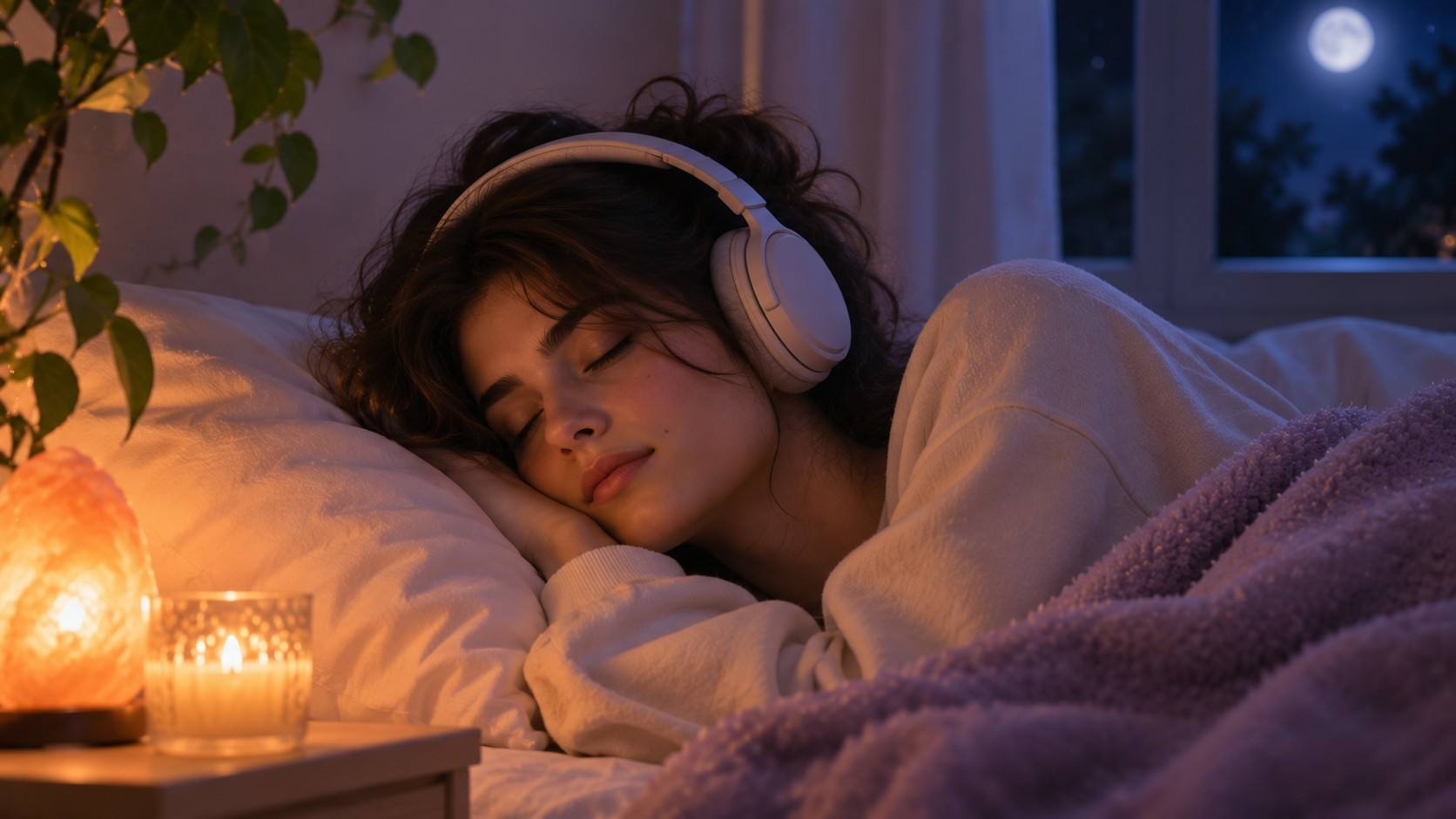
Build Your Personalized Bedtime Subliminal
Stop wondering what is playing in your sleep. Build a custom subliminal with your own words and soothing rain for peaceful overnight rewiring.
Create My Subliminal ✨Frequently Asked Questions (FAQ)
Can you listen to subliminals while sleeping?
Yes. Many people in the subliminal community listen to subliminals while sleeping, either for a short session as they fall asleep or with a low-volume loop overnight. It is a personal choice, and the best method is the one that feels comfortable and that you can repeat consistently.
Is it safe to listen to subliminals while sleeping?
For most healthy adults, listening to a calm track at a low volume is considered a comfortable routine. The main practical considerations are ear comfort and hearing safety, so many people prefer a bedside speaker over in-ear earbuds, keep the volume low, and stop if they notice discomfort or poorer sleep.
Should I use headphones or a speaker?
A small speaker placed near the bed is often the easiest and most comfortable option. If you use headphones, soft over-ear or sleep-specific headphones are generally gentler than earbuds, and you should keep the volume very low. Tracks with binaural beats need stereo headphones.
What volume should I use?
Keep it low enough that it feels like soft background sound. Set the level while you are lying in bed in the dark, and avoid anything loud enough to disturb your sleep or strain your ears.
Should my track loop all night or stop after a while?
Both approaches are common. Some people prefer a 20 to 30 minute session with a timer, while others like a gentle overnight loop. Start with whichever feels more comfortable and adjust after a week or two.
Can subliminals affect my sleep quality?
That depends on the person and the setup. If a track or a volume level leaves you feeling restless, switch to a shorter session, lower the volume, or try a calmer background sound. If sleep problems continue, a healthcare professional can help.
How long until I notice anything?
Experiences vary widely. Many people in the community listen consistently for several weeks before deciding how they feel, and some prefer to focus on small shifts in mood and routine rather than dramatic changes. No specific timeline or outcome is guaranteed.
Final Thoughts
So, can you listen to subliminals while sleeping? Yes, and for many people it becomes the easiest part of their routine. A calm session at bedtime, a comfortable speaker, a low volume, and a track that you have reviewed yourself are all you really need.
Start simple, keep it gentle, and give yourself a few weeks to settle into the habit. Sleep always comes first, so adjust anything that does not feel right.
If you would like a track made around your own goals, you can create your own personalized, high-quality subliminal with InnerBloom AI. Describe your intention, review every affirmation, choose a calming sound, and download your lossless WAV file for tonight's routine.
Disclaimer: This article is for educational and informational purposes only and is not a substitute for professional medical, psychological, or psychiatric advice. Subliminal audio is a personal development tool that is popular within the manifestation and self-improvement community, and it is not a treatment for sleep disorders, anxiety, depression, or any other health condition. The study mentioned here is provided for general context only and does not establish that subliminal audio produces any specific result. No outcome is guaranteed or implied, and individual experiences vary. Never listen to relaxation audio while driving or operating machinery, and keep volumes low to protect your hearing. If you have concerns about your sleep or your mental or physical health, please consult a qualified healthcare professional. InnerBloom Subliminal Maker is a personal development tool intended for general mindset and wellness support.
Found this helpful? Share it with someone who needs it 💜